


The Truth About AI Expertise in Procurement: It's Not Just the Prompt

Updated: Jul 15
Many AI-related posts create the impression that expertise can be injected into a model through a prompt. The magic happens after you write:
“Act as a procurement expert.”
“Act as a CFO.”
“Act as a strategy consultant.”
If expertise could be created through prompting, organizations using the same models and similar prompts should produce broadly similar recommendations.
The real limitation of modern AI is rarely the prompt itself. It is the quality of the data, information, knowledge, and decision frameworks available to the model. Using the DIKW (Data–Information–Knowledge–Wisdom) hierarchy, we will reflect on why prompts can trigger reasoning but cannot create expertise, and why organizations should invest in knowledge engineering before prompt engineering.
Understanding the Real Issue
In practice, some organizations obtain useful outputs, while others receive generic observations, robo-consultant-style recommendations, and conventional wisdom. The difference is usually not the prompt; it's what's feeding it.

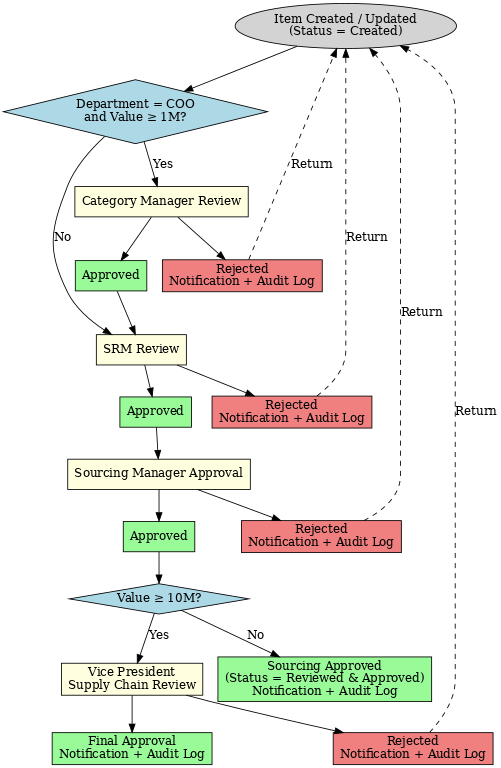
The diagram I asked ChatGPT to create based on my real AI-enabled solution illustrates the point:
The reasoning engine appears near the end of the process rather than at the beginning.
Before any reasoning occurs, data must be collected and structured.
Information must be generated from that data.
Knowledge must be accumulated through experience, frameworks, methodologies, and organizational learning.
Only then can judgment be applied.
This is not a new idea. It is simply the DIKW hierarchy:
Data → Information → Knowledge → Wisdom
A prompt does not allow bypassing these stages.
The Role of Expertise in Procurement
A procurement team without category strategies, supplier intelligence, governance models, and sourcing experience does not become an expert simply by asking AI to behave like a category manager. A finance function does not acquire commercial judgment simply by instructing AI to act as a CFO.
The model may generate language associated with those roles, but generating language and exercising judgment are not the same thing.
The Importance of Knowledge Systems
This distinction explains why prompt engineering often produces diminishing returns. Organizations continue to refine instructions while the real constraint lies elsewhere. Missing knowledge or poor decision-making cannot be solved by better prompting.
The most valuable asset is therefore not a prompt; it is a knowledge system behind the prompt. That is why the debate should be less about prompt engineering and more about knowledge engineering.
A prompt can initiate reasoning, but it cannot leapfrog the journey from data to wisdom.
The Future of AI in Procurement
As we look ahead, the integration of AI into procurement processes will only grow. However, we must remember that technology is a tool, not a replacement for expertise.
Embracing Automation
Organizations should embrace automation, but they must also invest in building robust knowledge systems. This means training teams, developing frameworks, and creating a culture of continuous learning.
The Balance Between AI and Human Insight
AI can enhance decision-making, but it cannot replace the nuanced understanding that comes from experience. The best results will come from a blend of human insight and AI capabilities.
Conclusion: From prompts to knowledge systems
In conclusion, let's shift the focus from merely crafting prompts to building comprehensive knowledge systems. By doing so, we can truly harness the power of AI in procurement.
So, the next time you think about using AI, remember: it’s not just about the prompt. It’s about the expertise that backs it up.
P.S. This website demonstrates how to transform messy, manual processes into efficient, automated workflows using Microsoft 365, with the bold intention of becoming the go-to resource for practical procurement strategy, automation design, and hands-on training.
Comments